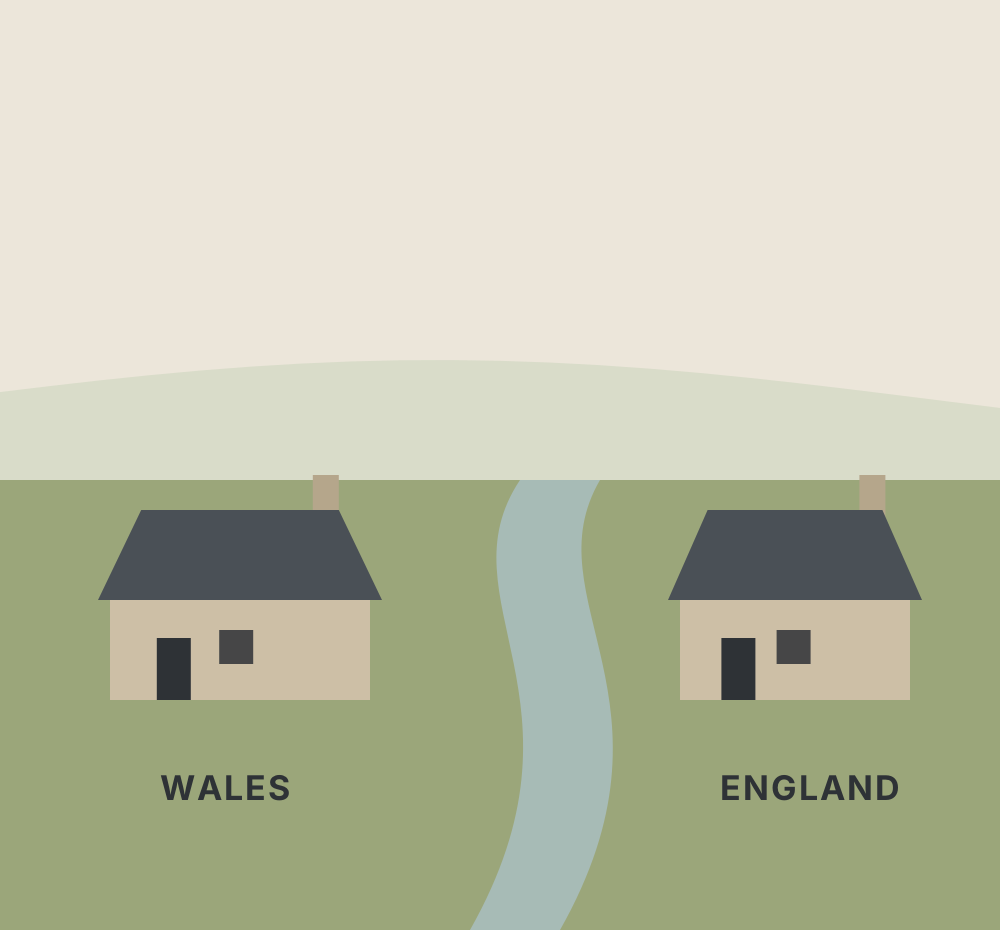
Most of us never think about where our water comes from or where it goes. Buy a rural home in the Wye Valley or the Vale of Usk, though, and there is a good chance that both will become your responsibility. Private drainage and private water supplies are perfectly normal in the countryside and, when they are well maintained, they work quietly for decades. When they are not, they can be expensive to put right and can even delay a sale. This guide explains how the systems work, how the rules differ either side of the border, and what to check before you commit.
Mains or private?
The first question to ask about any rural property is simply whether it is connected to the public sewer. The estate agent's particulars should say, but it is worth asking directly and having your solicitor confirm it through the drainage and water search. If the answer is no, the home will use one of three types of system.
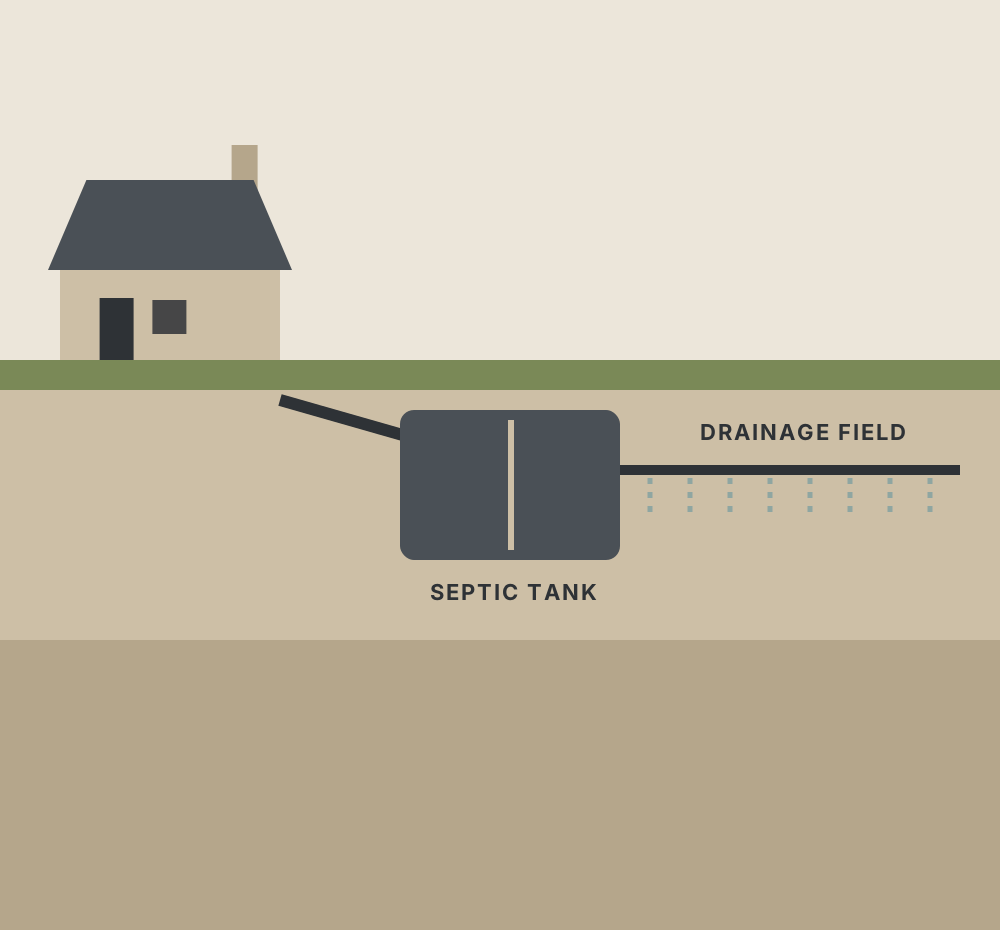
Septic tank: An underground tank, usually concrete, brick or fibreglass, in which solids settle and are broken down by natural bacteria. The liquid that remains flows out into a drainage field (sometimes called a soakaway), a network of perforated pipes laid in gravel trenches that lets the effluent filter slowly through the soil. Septic tanks are simple and long-lived, but they rely on the ground around them to finish the treatment.
Small sewage treatment plant: Sometimes called a package treatment plant, this is a more sophisticated system that uses an electric pump or aerator to treat the sewage more thoroughly. The cleaner effluent can discharge to a drainage field or, with the right permissions, to a watercourse. Treatment plants need electricity and an annual service, but they suit sites where the ground drains poorly.
Cesspit: A sealed tank with no outlet at all, which simply stores waste until it is emptied by tanker. Cesspits are now uncommon and can be costly to run, because they may need emptying every few weeks.
The rules in Wales
Wales has had a registration system since 2010. If you own a septic tank or small treatment plant in Wales, it must be registered with Natural Resources Wales (NRW). For most domestic systems this is a one-off registration that costs nothing, provided the system only handles household sewage, the property cannot connect to the public sewer, and the discharge is not too close to a well or borehole (NRW). Systems that don't meet those conditions need an environmental permit instead.
Registration comes with ongoing duties. Owners must keep their systems in good working order, have them emptied and maintained regularly, and keep records of checks and emptying for five years, both for NRW and for any future buyer (NRW). NRW also expects sellers to tell buyers in writing that the property has a private system. If you are buying in Wales, ask for the registration confirmation and the records as a matter of course.
The rules in England
Across the border in Gloucestershire and Herefordshire, there is no registration scheme. Instead, small sewage discharges must meet the Environment Agency's general binding rules. You can discharge up to 2,000 litres a day to ground through a septic tank or treatment plant, or up to 5,000 litres a day to a stream or river, but only from a treatment plant (Howes Percival). Septic tanks are no longer allowed to discharge straight into a watercourse. Older systems that do so must be upgraded or replaced, and responsibility for that often comes up when a property changes hands. Your solicitor should ask the seller to confirm in writing that the system complies.
In both countries, a system in or near a sensitive area, such as close to a protected river, may need a permit even if it would otherwise be exempt.
Private water supplies
Away from the main roads, some homes still draw their water from a spring, a well or a borehole. A good private supply can be a real asset, offering soft, clean water with no water bill. It does, however, mean that the quality and reliability of your drinking water become your responsibility rather than a water company's.
Who regulates them: In both Wales and England, private water supplies are regulated by the local council. Councils carry out risk assessments and testing, particularly where a supply serves more than one home or is used by a business such as a holiday let, and they can require improvements if the water is unsafe. A supply that serves a single private home is subject to lighter oversight, which makes your own checks all the more important.
Treatment: Many private supplies pass through filters and an ultraviolet unit to remove sediment and kill bacteria. These systems need regular maintenance, including replacing UV lamps and filter cartridges, and they rely on a power supply.
Reliability: Springs and shallow wells can run low in a dry summer. Ask the sellers whether the supply has ever failed, and whether they have ever needed to bring in bottled or tankered water.
Shared supplies: It is common for several neighbouring properties to share a single spring or borehole. Where they do, there should be a written agreement covering who can use the water, who maintains the source and pipework, and how costs are divided. If there isn't one, ask your solicitor to raise it before exchange.
What to check before you buy
Private systems are rarely a reason to walk away, but they are a reason to ask good questions and to budget sensibly. Replacing a failed drainage field or upgrading an old septic tank can cost many thousands of pounds, so it pays to know what you are buying.
-
Is the property on mains sewerage and mains water? If not, which systems does it use?
-
Wales: is the septic tank or treatment plant registered with Natural Resources Wales? Ask for confirmation.
-
England: does the system comply with the general binding rules, particularly if it discharges to a stream or ditch?
-
How old is the system, and when was it last emptied and serviced? Ask to see the records.
-
Where exactly are the tank, the drainage field and any outlet pipe? Are any of them on a neighbour's land, and if so, is there a legal right to access and maintain them?
-
Is the system shared with other properties, and is there a written agreement?
-
Has a drainage survey been carried out? If not, commission one, ideally including a camera inspection of the pipes.
-
For a private water supply: when was the water last tested, what treatment is in place, and has the supply ever run dry?
-
Does your lender need any of this information before it will make an offer?
A little time spent on these questions now can save a great deal of cost and stress later. Your solicitor and surveyor will guide you through the detail, but walking into those conversations already knowing what to ask makes the whole process smoother.
Sources
-
Register your septic tank or small sewage treatment plant, Natural Resources Wales
-
Running and maintaining a septic tank or small sewage plant, Natural Resources Wales
-
Regulation of small sewage discharges, Howes Percival