In a town, the boundaries of a house are usually obvious and the road outside belongs to the council. In the countryside, things are rarely that tidy. A farmhouse may be reached by a track that crosses three fields belonging to someone else, a footpath may run past the kitchen window, and the deeds may be a bundle of handwritten conveyances rather than a neat entry at HM Land Registry. None of this is unusual in the Wye Valley or the Vale of Usk, and none of it need put you off. It does mean understanding what you are buying, and making sure your solicitor checks it properly.
Private rights of access
If the only way to reach a property crosses land owned by somebody else, the property needs a legal right of way over that land. This is a form of easement: a right that benefits one piece of land and burdens another, and that passes automatically to each new owner.
What the right covers: Rights of way vary. Some allow access on foot only, some with vehicles, and some for specific purposes such as agricultural use. A right granted decades ago for a horse and cart may not obviously extend to a family with two cars and regular deliveries. Your solicitor should check that the right is wide enough for the way you intend to use the property, including access for construction traffic if you plan building work.
Where the right comes from: The best rights are written down, either in the registered title or in an old deed. Others arise from long use. In broad terms, a right of way can be acquired by using a route openly, without permission and without force, for twenty years or more. Rights acquired this way are valid but harder to prove, and buyers and lenders often ask for statutory declarations from the seller, or for title insurance, to give them comfort.
Maintenance: A right of way does not usually come with a clear duty on anyone to maintain the track. Ask who repairs it, how the cost is shared between the properties that use it, and whether there is a written maintenance agreement. Potholed farm tracks can become a source of friction between neighbours, so it is far better to understand the arrangement before you buy.
Public rights of way
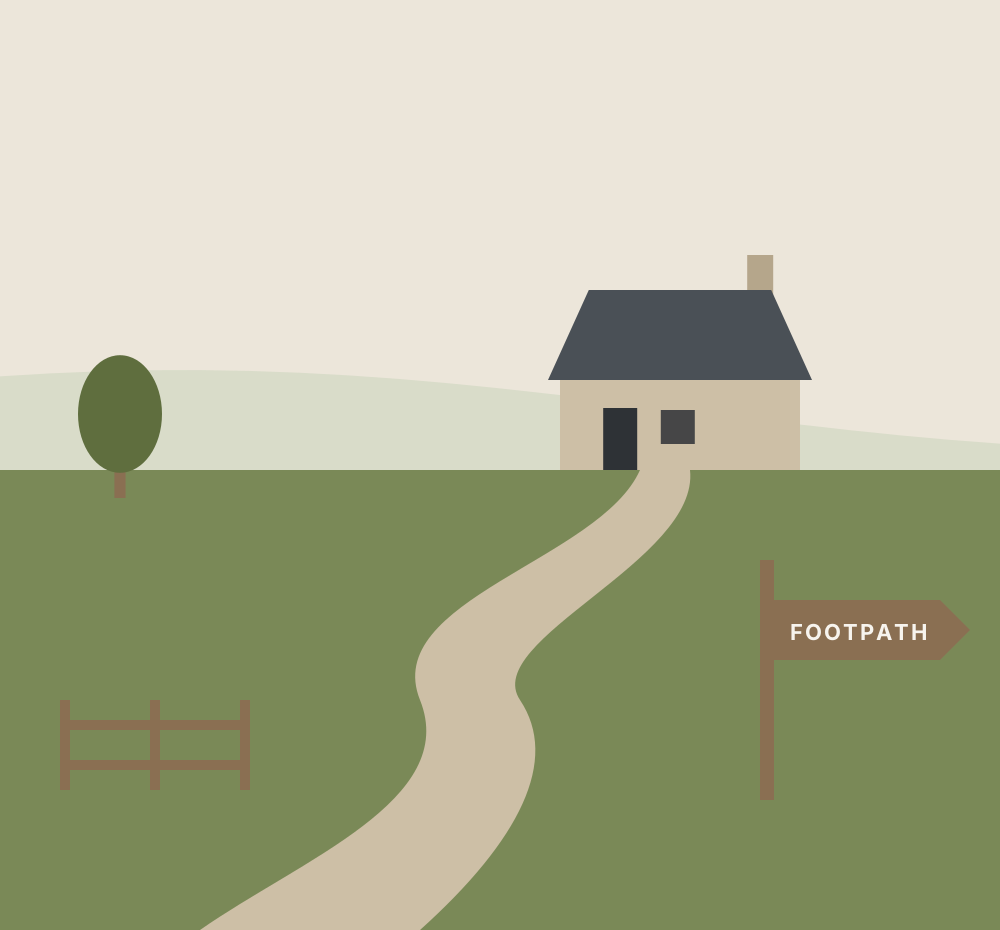
Wales and England are crossed by a dense network of public footpaths, bridleways and byways, and the Wye Valley is walking country. The Wye Valley Walk and Offa's Dyke Path both pass through the area, along with countless local paths.
How to check: Public rights of way are recorded on the council's definitive map, which your solicitor will check as part of the searches. You can also look at Ordnance Survey maps or the council's online map before you view. A path recorded on the definitive map is a legal right of way, even if it is overgrown or rarely used.
What it means for you: If a public path crosses your land, you must keep it open and free from obstruction, and you cannot simply move or close it. Diverting a path requires a formal order from the council, which takes time and is not guaranteed. A footpath across a field is rarely a problem, but one running through a garden or a farmyard can affect privacy and security, so walk the route yourself before you make an offer.
Shared drives, services and wayleaves
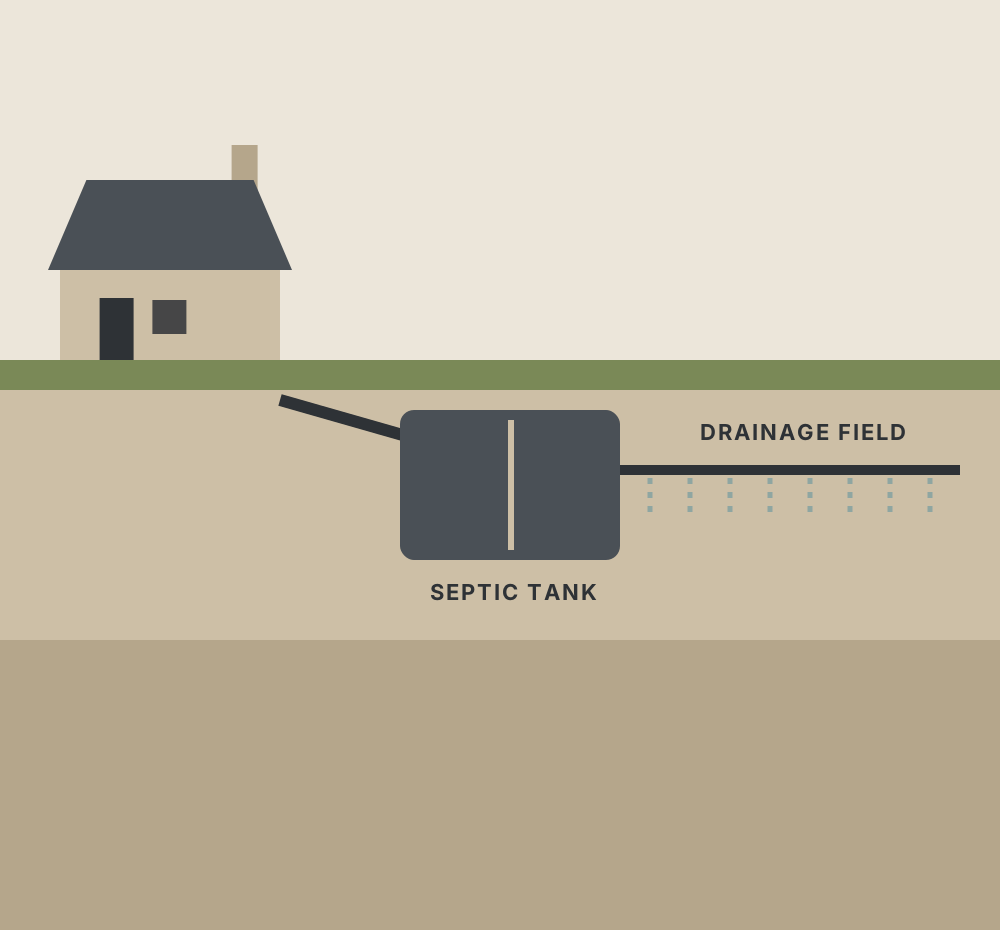
Rural properties often share more than a track. Drains, water pipes, electricity cables and telephone lines may cross neighbouring land, and your neighbours' services may cross yours. Each of these should be supported by an easement or a written agreement giving the right to run, inspect and repair them.
Electricity poles and overhead lines across a property are usually covered by a wayleave agreement with the local electricity network operator, which may pay the landowner a small annual sum. Wayleaves can often be ended or renegotiated, but the network operator can also seek a permanent right, so ask the sellers what agreements are in place. If you plan to build near a line or a pole, check the clearance distances early.
Unregistered land
Most property in Wales and England is now registered at HM Land Registry, which means ownership is recorded in a single, state-guaranteed register with a title plan. Land only has to be registered when it changes hands or is mortgaged, however, so farmhouses and cottages that have stayed in one family for generations are more likely than most to be unregistered.
What it means: Unregistered land isn't defective. Ownership is proved by the deeds themselves, a chain of conveyances, wills and other documents stretching back at least fifteen years to a good "root of title". Your solicitor will examine these documents carefully, which takes longer and can raise more questions than a registered title.
What happens on purchase: When you buy, the land must be registered for the first time, and your solicitor will make that application. It is a good moment to resolve any gaps or inconsistencies in the deeds, rather than leaving them for the next buyer.
Lost deeds: Occasionally old deeds go missing. That can usually be dealt with, often through statutory declarations and title insurance, but it adds time and cost, so raise it early.
Boundaries
Even where land is registered, the title plan only shows general boundaries. The red line on a Land Registry plan is not a precise survey, and it will not tell you exactly where one field ends and the next begins, or who owns a hedge, a wall or a ditch. In the countryside, boundaries can also drift over time as fences are moved, hedges grow and streams change course.
Walk the boundaries with the plan before you buy. Look for fences or walls that don't match the plan, gates into neighbouring land, and any sign that a neighbour is using part of the property, or that the property is using part of theirs. Ask the sellers about any disagreements past or present, which they are obliged to disclose. If something doesn't add up, raise it with your solicitor, who may suggest a measured survey or an agreement with the neighbour before exchange.
Fields, woods and riverbanks: If the sale includes land, check exactly what is included, whether any of it is let to a farmer or covered by grazing or environmental agreements, and who owns the bed and banks of any stream or river. Fishing rights on the Usk and the Wye can be valuable and are sometimes owned separately from the land beside them.
Your checklist
-
Does the property have a legal right of way along the whole of its access, for vehicles as well as on foot?
-
Is the right written down, or does it rely on long use? If the latter, what evidence or insurance is available?
-
Who maintains any shared track, and how are costs shared?
-
Do any public footpaths, bridleways or byways cross the property? Where exactly do they run?
-
Are drains, pipes and cables to and from the property protected by easements or agreements?
-
Are there electricity poles or lines on the land, and are wayleave agreements in place?
-
Is the title registered? If not, are the deeds complete?
-
Do the boundaries on the ground match the plan? Any past or present disputes?
-
If land is included, is any of it let, or subject to agreements or third-party rights?
-
Are fishing or riverbank rights included in the sale?
Rights of way and boundaries are some of the most common sources of neighbour disputes in the countryside. A thorough check before you buy is the best way to ensure your new home brings you peace and quiet rather than a long-running argument over a gate.